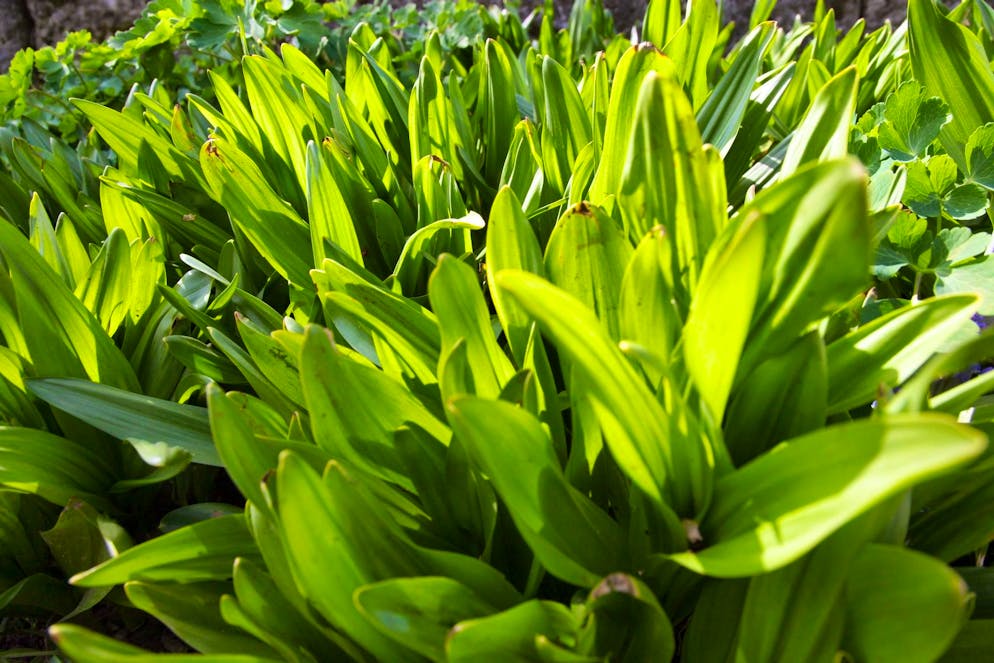
Confusingly similar How to distinguish wild garlic from highly poisonous plants
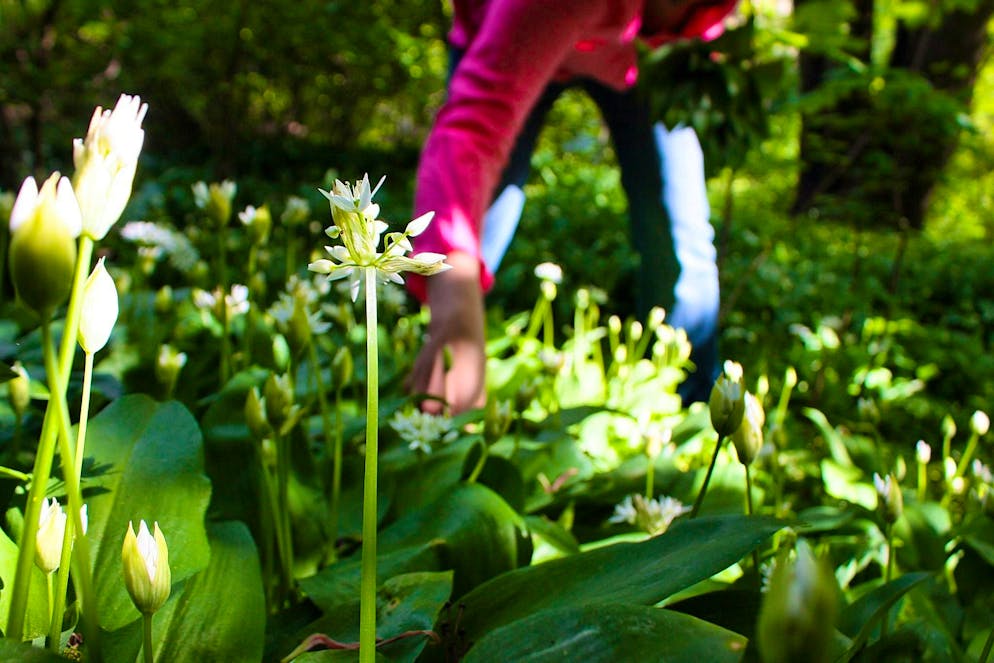
Only if you look closely can you distinguish wild garlic from other, highly poisonous plants. blue News shows you the differences.
No time? blue News summarizes for you
- Spring is wild garlic season again. Yay!
- When picking your own wild garlic, it's important to distinguish it from other highly poisonous plants.
Wild garlic grows from March to May and is very popular on dinner plates. However, a case from Austria shows that its consumption is not without risks: a married couple picked wild garlic. However, there was a serious mix-up. Instead of wild garlic, a highly poisonous plant ended up in the soup pot. The couple were admitted to hospital in stable condition, but died there a few days later.
blue News answers the most important questions and explains how to distinguish wild garlic from its highly poisonous doppelgangers.
Which plants can be confused with wild garlic?
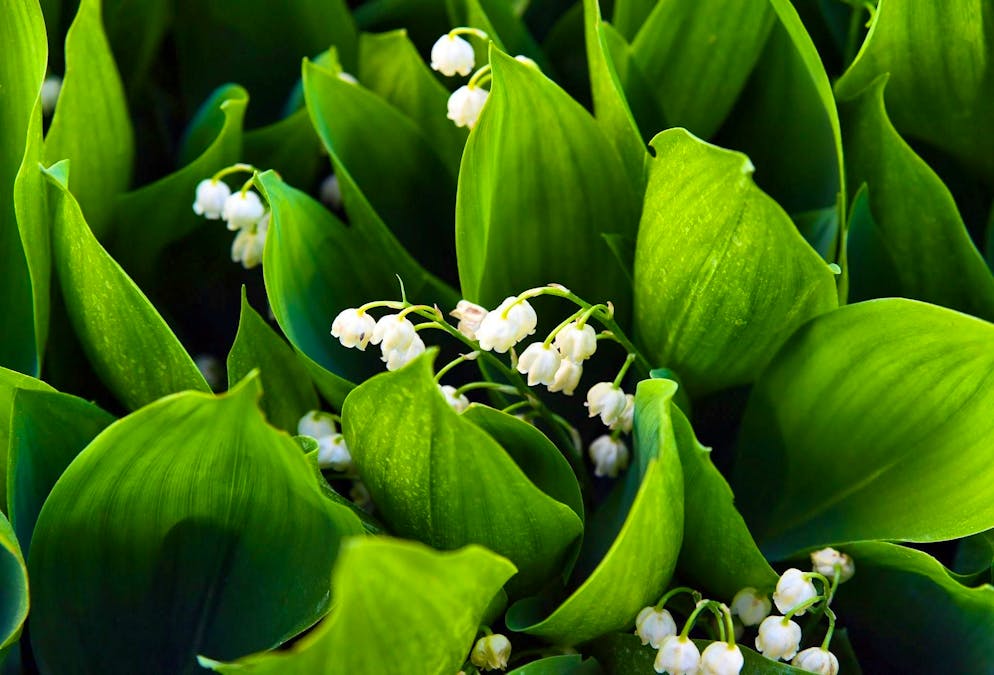
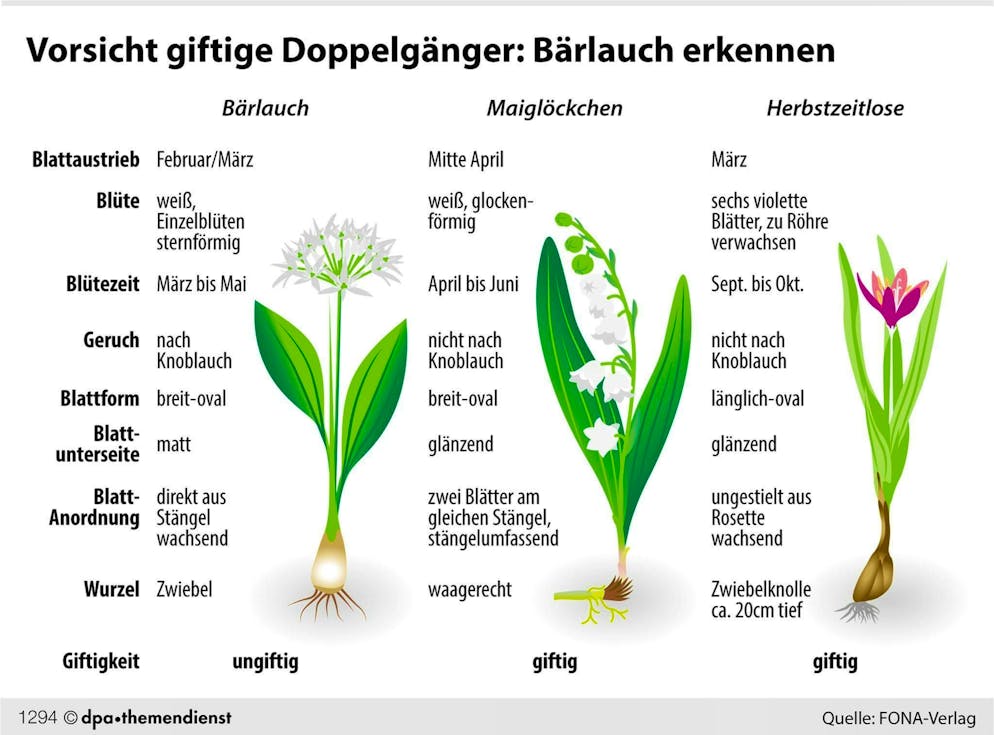
Wild garlic looks very similar to the poisonous lily of the valley and autumn crocus.
How can wild garlic be distinguished from poisonous plants?
The leaves can be distinguished by various small characteristics:
- The leaves of wild garlic sprout individually from the ground, there is a clearly recognizable, thin stem and the leaf shape is elliptical. Only the upper side of the leaves is shiny, the underside is matt.
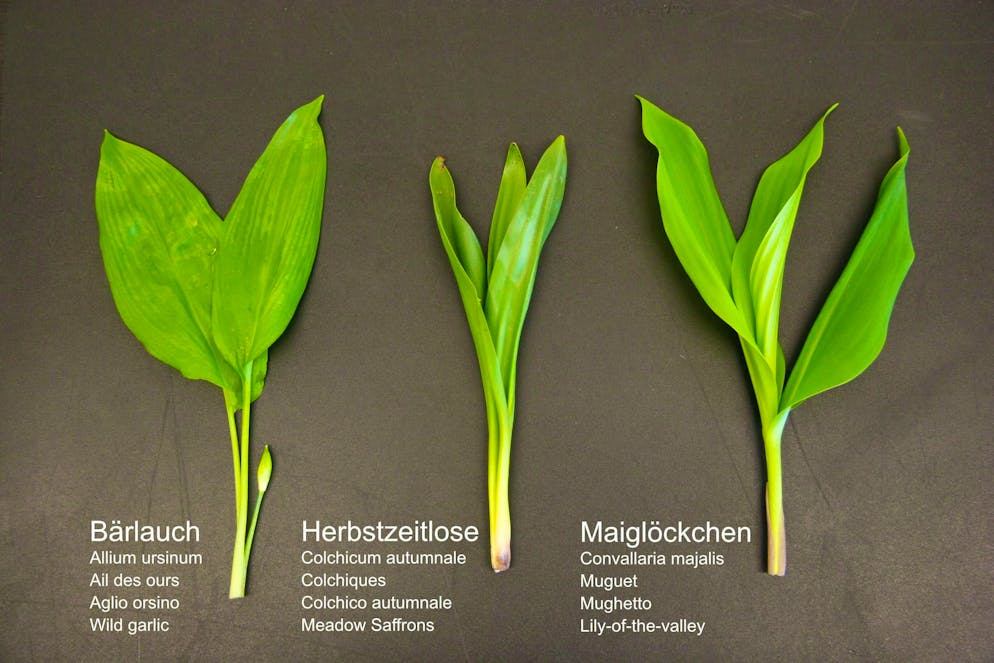
- Autumn crocus leaves, on the other hand, sit directly on the stem and have a lanceolate leaf shape. They also do not have the characteristic garlic smell immediately after picking.
- Lily of the valley leaves wrap around the stem. The leaves have a shiny underside and also do not smell immediately after picking.
- The most characteristic is certainly the intense smell of wild garlic: it smells intensely of garlic. Simply peel off a leaf, crush it and smell it.
- The dense growth is also typical of wild garlic: it often grows over large areas in the forest and completely covers the ground.
- The flowers can also provide clues. In wild garlic, the leaves sprout first. The flowering shoots only follow after six weeks. In lily of the valley, on the other hand, the leaves emerge directly from the ground with the bell-shaped flower stalks. The flowers of the autumn crocus only appear in the fall.
What happens when you eat lily of the valley or autumn crocus?
- The leaves of the lily of the valley contain many toxins. These cause dizziness, diarrhea, a tight feeling in the chest or even cardiac arrhythmia. However, severe cases are rare.
- Poisoning with autumn crocus is different. Even small amounts of the poison in the leaves can lead to respiratory problems. Ingestion can lead to nausea, drowsiness, diarrhea, increased heart rate, cramps and sweating - and poisoning is often fatal.
Tips from the Institute of Toxicology
- Check each leaf individually
- Avoid the edge of the forest when picking - autumn crocus is more common there
- Identify leaves directly on site: After picking, they resemble each other even more
(Tox-Info)
Poisonous for dogs and horses
Unlike our plants, wild garlic is poisonous to dogs and horses, warns Tina Hölscher, a vet from the animal welfare organization Aktion Tier. It destroys the red blood cells and thus leads to anemia. This is due to the effect of the toxic substance methylcysteine sulphoxide in wild garlic.
The first symptoms of such poisoning are irritation of the mucous membranes. However, these can hardly be diagnosed in the animal as it cannot communicate its symptoms. The owner usually only notices that something is wrong with their pet when diarrhea and vomiting occur.
There is no real antidote. The vet can only try to stabilize the animal's circulation with infusions. In the worst case, a blood transfusion may be necessary to replace the damaged red blood cells.
It is difficult to say how much wild garlic is fatal for a dog or horse. The dose depends on the weight of the animal and the amount of toxin contained in the wild garlic. Both vary greatly. "Therefore, dog and horse owners are well advised to simply not feed their animals any wild garlic at all, then they are on the safe side," advises the vet. She also recommends removing wild garlic and bulbs from the ground in paddocks.