Biotechnology Researchers insert 3D-printed laboratory ears into rat skin
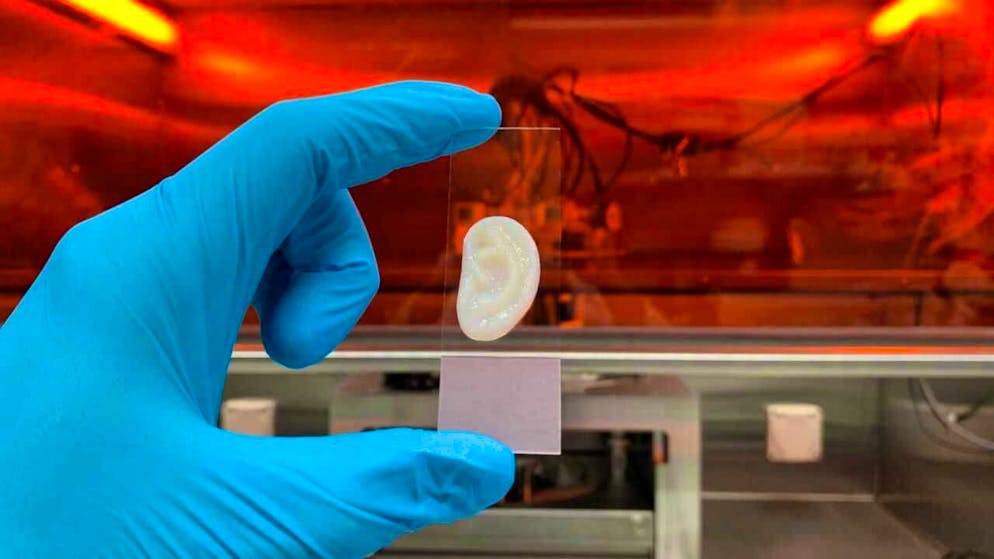
According to a study published in the journal "Advanced Functional Materials", the first laboratory-generated ear was implanted after ten years of research. The conclusion: despite great success, the tissue still needs to be made more stable.

24.02.2026, 16:45
SDA
The artificial ear cartilage, which was implanted into the skin of rats, was able to retain its shape for six weeks. This brought the team, consisting of researchers from ETH Zurich, the Friedrich Miescher Institute in Basel and the Lucerne Cantonal Hospital, a considerable step closer to the goal of producing an ear in the laboratory.
Before they were implanted in the rats, the ears matured in the laboratory for around nine weeks: researchers first grew cells from millimeter-sized pieces of tissue and then used a 3D printer to shape them into an ear. Because the artificially created ears come out of the printer very soft, they are nurtured with nutrients in an incubator until they are firm enough.
The recipe for a stable ear shape lies in a biological blueprint - which researchers first have to decipher. The search requires a lot of patience. In addition, each experiment takes several months. They hope to find it within the next five years. "If everything goes well," predicts Philipp Fisch, the first author of the study.
Researchers have already been working on this for ten years. However, progress in the production of tissue is rarely visible quickly. There is great interest on the part of those affected: "As soon as the study was published, I received a message from parents of a child with microtia," said Fisch.
The research is relevant: Time and again, people lose parts of their ears in fires or accidents. Around 10,000 children also suffer from congenital malformations. Today, rib cartilage is used for replication - but these procedures are painful and can cause scars or deformities. In addition, artificial ears are often stiffer than natural ones.
In addition, there are still regulatory hurdles to overcome before artificial ear cartilage can be approved for use in humans. According to Fisch, the current study shows how close research is already coming to a natural ear - and what is still missing.