The Federal Council must also make an appearance Why Trump can't just go to Congress - 5 facts about the "State of the Union" speech
The "State of the Union" is far more than just an ordinary speech. When the US President speaks in the Capitol, it's not just about the state of the nation, but also about power and a staged ritual.
No time? blue News summarizes for you
- The State of the Union Address is a traditional act of state in which the US President informs Congress about the state of the nation and announces political plans.
- The address follows fixed ceremonies, includes special security precautions such as the "Designated Survivor" and has been held in person in the Capitol again since 1913.
- In Switzerland, there is something similar: the Federal Council has to explain what it has done in its annual report to parliament every year.
The "State of the Union Address" is more than just a speech. It is an act of state with a long tradition and unusual rules. The US President informs Congress about the state of the nation and announces new plans. blue News provides five facts.
The President needs an invitation
The US Constitution requires the President to report to Congress "from time to time" on the state of the nation (Article II, Section 3). However, it does not specify in what form it must do so. As a parliament, Congress is an independent power. Therefore, the President needs a formal invitation from the House of Representatives for a joint session of both chambers of Parliament.
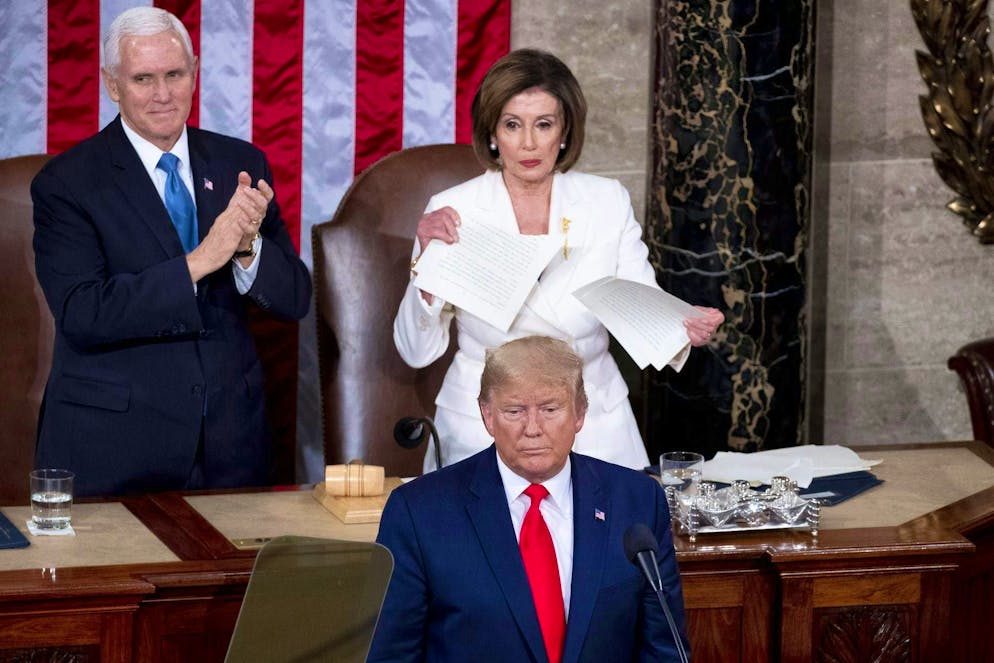
Just how tense the relationship can be was demonstrated in 2019, when Nancy Pelosi, then Speaker of the House of Representatives, threatened to withdraw Donald Trump's invitation during the government shutdown. She cited security concerns due to unpaid Secret Service employees. Trump postponed the speech. Pelosi only invited him again after the end of the shutdown. The speech took place on February 5, 2019.
"State of the Union" was not a speech for a long time
Today, the President speaks in person at the Capitol. This was not always the case. Former presidents like Thomas Jefferson delivered their message in writing. Jefferson considered an oral address too monarchical. It is only since Woodrow Wilson in 1913 that the personal address has once again become standard practice.
The name also changed. From George Washington to Herbert Hoover, people spoke of the "Annual Message". It was not until Franklin D. Roosevelt officially used the term "State of the Union" in 1941.
A minister is not allowed to listen
The Supreme Court judges, the military leadership and almost the entire cabinet attend the speech. However, one member of the government is deliberately absent.
Since the 1980s, a so-called "designated survivor" has remained in a secret location. This is to ensure the state's ability to act in the event of an attack in the Capitol.
After the attacks of September 11, 2001, the authorities tightened security even further. Individual members of Congress are also kept in an undisclosed location during the speech. This year, Veterans Affairs Minister Doug Collins was hit. He would become president if all other office holders in the Capitol were to die in an attack.
The scenario was taken up by the TV series "Designated Survivor" in 2016: After an attack on the Capitol, a little-known minister becomes president overnight and has to stabilize the political system.
The staging follows fixed rules
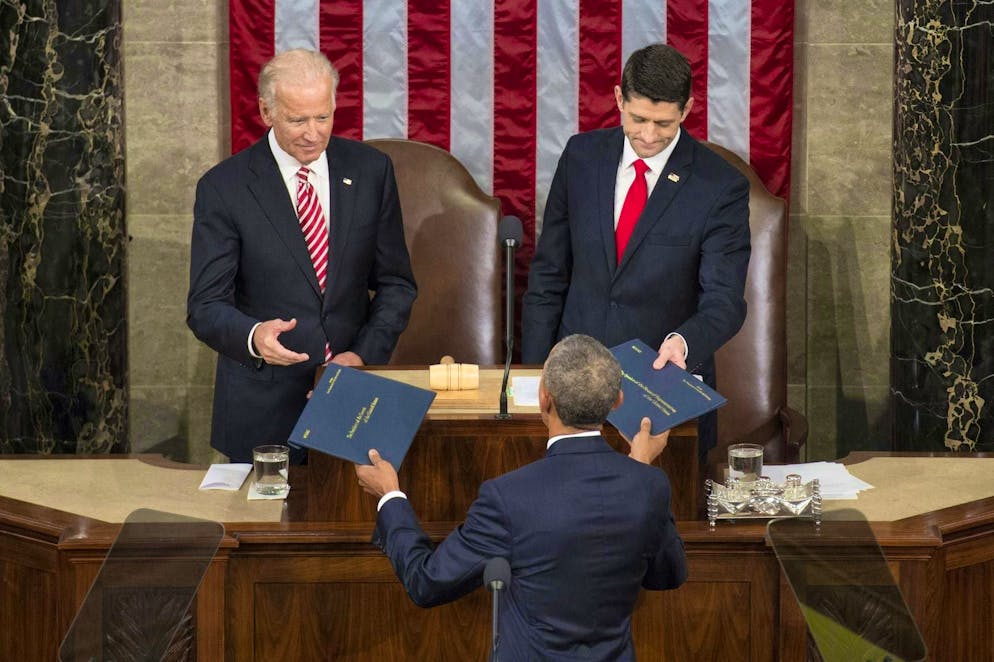
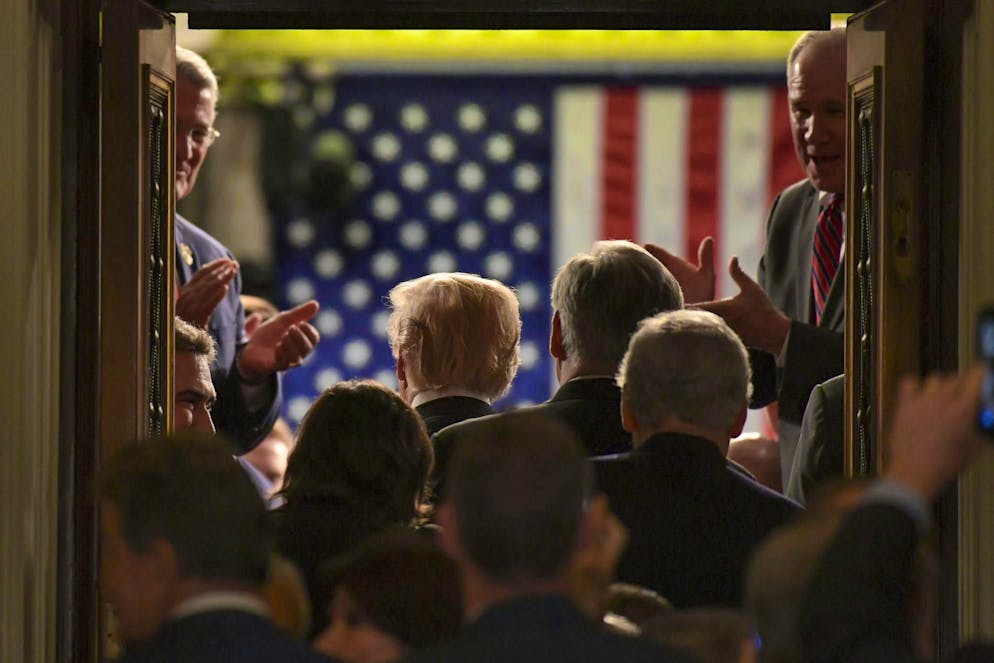
The President only enters the hall after an official announcement by the "Sergeant at Arms". The master of ceremonies calls out: "Madam (or Mister) Speaker, the President of the United States!" The President then strides to the podium. He hands a copy of the speech to the Speaker of the House of Representatives and the Vice President, who presides over the Senate. Both sit behind him during the speech.
«Madam Speaker, the president of the United States!»
Today, the speech usually lasts just over an hour. The President uses a teleprompter. Applause regularly interrupts the speech - often unanimous from his own party, more reserved from the opposition. In recent years, the President has also invited foreign guests or citizens as guests of honor, to whom he refers in his speech.
The Swiss Confederation also has something like a "state of the nation"
There is no direct equivalent. However, the Federal Council submits its annual report to the Federal Assembly every year. Based on the Parliament Act, it provides information on its activities and objectives.
Unlike the US speech, this is a written document. It is published in the Federal Gazette and is organized by department. Each report comprises several hundred pages. In 2024, it was around 190, but it serves a similar purpose: Parliament should know how the country is doing and where the government is heading.
In parliament, the discussion is usually considered a formality. Individual members pick out certain departments and comment on them. As a rule, there is no vote.