Record values in Switzerland Permafrost is getting warmer - what's happening in the Alps
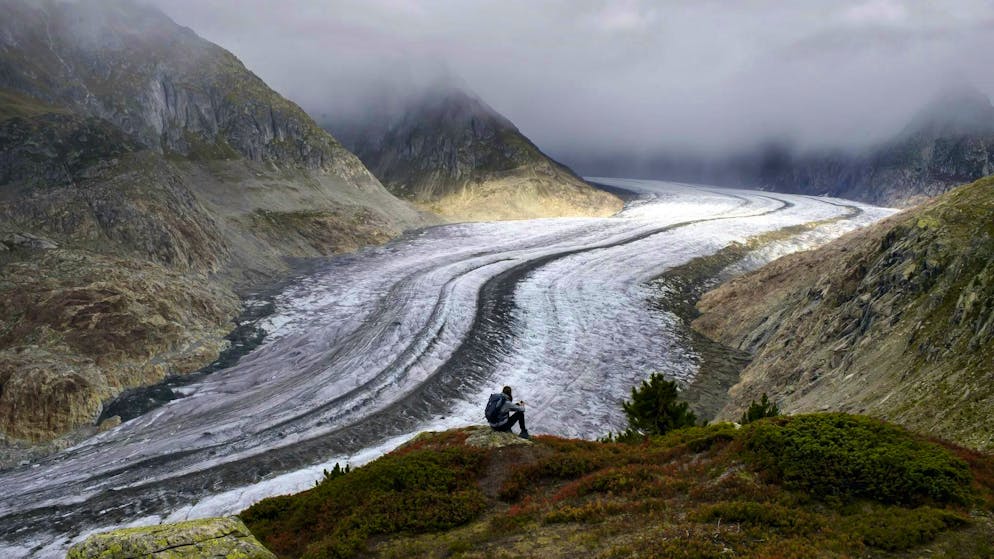
We are talking about areas in the Alps that have long been referred to as eternal ice - where even the rock is frozen and it is always bitterly cold. That is changing. Rapidly.

17.06.2025, 18:36
17.06.2025, 18:41
dpa
No time? blue News summarizes for you
- The permafrost in the Swiss Alps is thawing faster and faster.
- Never before have the thawed upper layers of permafrost been as thick as last year.
- Permafrost is one of several factors that influence the stability of frozen mountain slopes.
According to experts, the permafrost in the Swiss Alps is warmer than at any time since coordinated measurements began 25 years ago.
Permafrost is permanently frozen ground that occurs in polar regions or in high mountains. In Switzerland, this affects around five percent of the country's surface area.
In 2024, there were record values at practically all locations and in almost all measured categories, as the Academy of Natural Sciences writes.
One reason was the early snow in the fall of 2023. This stores heat in the ground. Without snow, the cold of winter penetrates the rock better.
Many measured records
There is not a single record value, explains Jeannette Noetzli from the WSL Institute for Snow and Avalanche Research in Davos. Together with several other institutes, it operates the Swiss permafrost monitoring network Permos with 23 borehole locations.
Among other things, the permafrost temperatures are measured at various depths, as are changes in the ice content and the layer that thaws in summer and freezes again in winter.
At the 23 locations, the temperature at a depth of ten meters has risen by more than 0.8 degrees in some cases between 2014 and 2025, the academy reports. The permafrost is warming the most in regions where annual average temperatures are below two degrees and where there is little ice, such as on rock faces above 3,500 meters.
The thaw layer has become thicker at all locations, in some cases by several meters. On the Schilthorn in the Bernese Alps, this layer was no longer completely frozen through in winter for the first time in 2024.
The cause is climate change
The background to this is man-made climate change. The hydrological years 2022, 2023 and 2024 were among the five warmest on record since temperature measurements began in 1864.
The hydrological year begins in October, i.e. October 2021 to September 2022, and so on. Temperatures in these years would have been between 1.44 and 1.9 degrees above the average for the period 1991-2020.