At the Winter Olympics in Italy, Russian athletes are only allowed to compete as neutral athletes. Now the Paralympics follow and mark a controversial turning point.

25.02.2026, 05:01
25.02.2026, 07:39
SDA
The fire of the Winter Olympics has gone out - but the next flame is already making its way back to Milan and Cortina d'Ampezzo. On Tuesday, the torch for the Winter Paralympics was lit in Stoke Mandeville, England. And with it, the controversy over the admission of disabled athletes from Russia and Belarus will be carried to Italy with a flag and anthem.
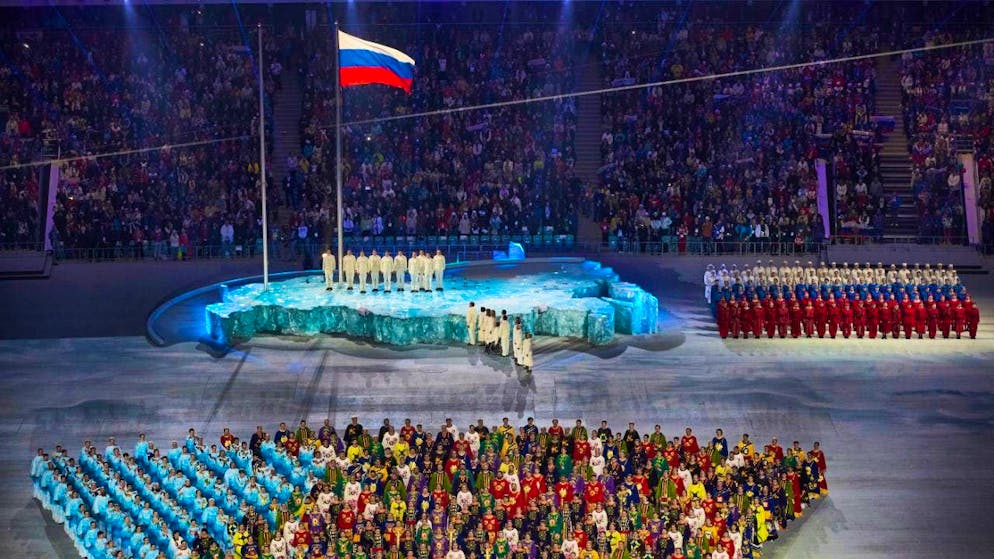
When the Winter Paralympics open in the Verona amphitheatre on March 6 for the 14th time since 1976, it will also mark the first major event on the world stage of sport at which Russia's national anthem could be officially played again for more than a decade.
Ukraine has announced that it will boycott the opening ceremony for this reason and is also demanding that its flag should not be flown there. They are "outraged by the cynical decision of the International Paralympic Committee" to allow six athletes from Russia and four from Belarus to attend the Games with their own flag and anthem.
IPC lifts ban
Due to state-organized doping and, above all, Russia's four-year war of aggression against Ukraine, individual athletes from the country of the aggressor were recently only allowed to compete in international sport as neutral athletes without flags, symbols and anthems. This was only possible after a careful background check, which ruled out any connection to the war and the government.
At the General Assembly of the International Paralympics Committee last September, the ban, which was valid from 2023 to 2025, was not extended. The four world federations for skiing and snowboarding, biathlon, curling and para-ice field hockey, which host competitions at the Paralympics, initially opposed Russia's participation. However, following an appeal by Russia, the International Court of Arbitration for Sport ruled that the blanket exclusion was unlawful.
Criticism from Italian ministers
This cleared the way for the corresponding anthem to be played and the flag to be raised at the Paralympics in the event of a Russian or Belarusian victory for the first time since 2014 in Sochi. For Italy's Sports Minister Andrea Abodi, this would have "a shocking value and a shocking significance", he said in an interview with the newspaper "Corriere della Sera".
Although Sports Minister Abodi is still hoping for a rethink within the IPC, he conceded that the Paralympic Committee's decision was legitimate from a formal and regulatory point of view. "We can be disappointed, sad, upset, but we have to respect the rules," the politician emphasized.
Reaction from Swiss Paralympic
"We respect the legal decision of the International Court of Arbitration for Sport and the democratic decision of the IPC General Assembly. At the same time, we are critical of the participation of the ten Russian and Belarusian athletes under their national flags," said the President of Swiss Paralympic, Christof Bär, when asked by Keystone-SDA.
Swiss Paralympic continues to regard participation under a neutral flag and with individual examination of the athletes' backgrounds as an appropriate way to protect the values of sport and fairness towards all athletes.
Swiss delegation not at the opening ceremony
The fact that the Paralympic Swiss Team will not be taking part in the opening ceremony in Verona is not a consequence of Russia's participation, but was decided a few months ago for sporting reasons. Only two athletes and two staff members from each nation are permitted to take part in the opening ceremony on March 6, and the travel time from Cortina to Verona is too long, as all Swiss athletes have their first competition the next day. The Swiss delegation will therefore open the Winter Games together as a team at the House of Switzerland in Cortina.