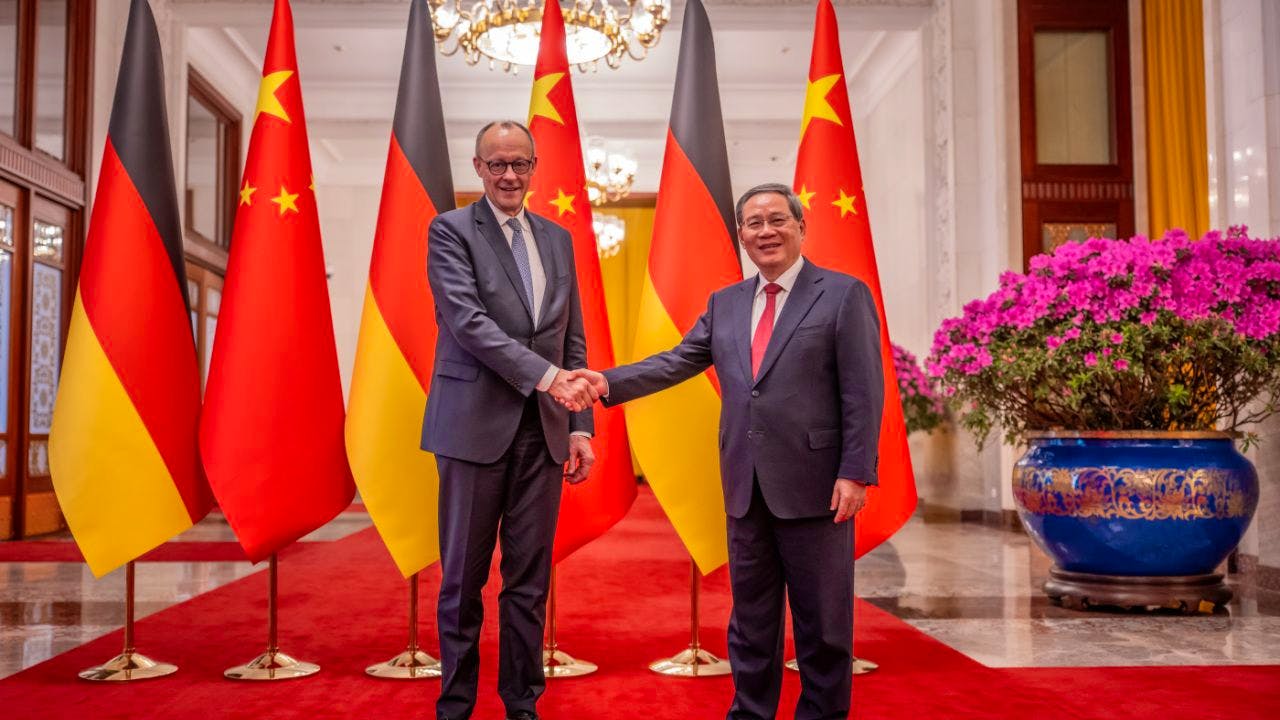
Germany Coalition of the willing wants to guarantee Ukraine's security
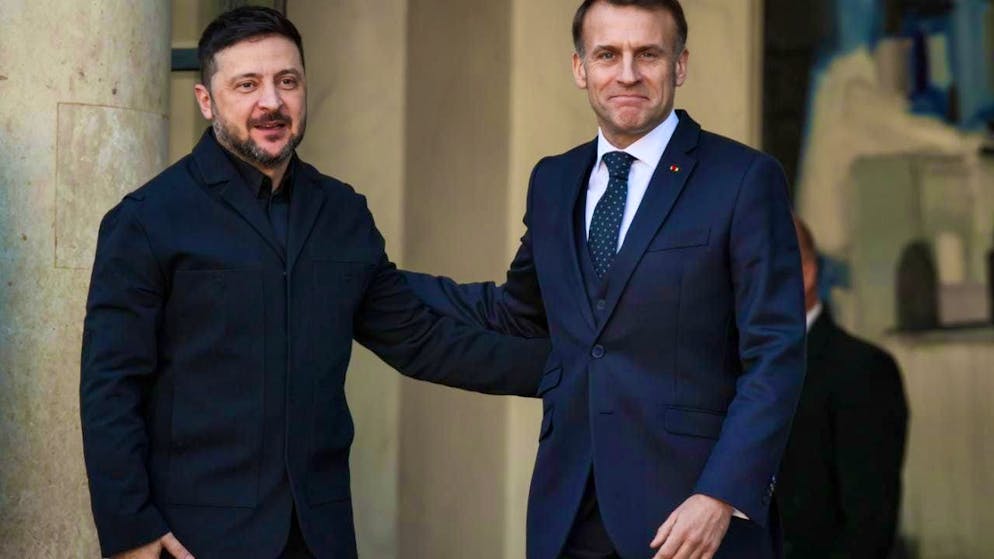
Western supporters of Ukraine have met with representatives of the USA in Paris to discuss securing a possible ceasefire or peace for the country attacked by Russia. "We are ready to commit ourselves to a system of politically and legally binding guarantees that will come into force as soon as a ceasefire comes into effect," said EU Council President António Costa after the consultations of the so-called "coalition of the willing". The EU will contribute to the efforts to ensure the security guarantees that Ukraine needs for any agreement on lasting peace.

06.01.2026, 19:48
06.01.2026, 19:49
SDA
A central point in this is the plan to give Ukraine a legally binding assurance that it will not be left alone in the event of another Russian attack, according to negotiating circles. The USA has reportedly pledged to support the coalition and to play a key role in monitoring a peace agreement.
Representatives from 35 countries, including 27 heads of state and government, took part in the consultations in Paris. Federal Chancellor Friedrich Merz (CDU) traveled from Germany. The Ukrainian head of state Volodymyr Selenskyj and NATO head Mark Rutte also took part in the summit. US special envoy Steve Witkoff and Jared Kushner, son-in-law of US President Donald Trump, attended on behalf of the USA.
The talks between the coalition led by France and the UK also focused on a proposed multinational force to secure peace between Russia and Ukraine. According to negotiating circles, this force would be under European leadership and have a command center in Paris. The USA wants to support this force with its intelligence service and logistics, for example.
What has the coalition already agreed on?
In September, 26 Western countries declared their willingness to send troops to secure a ceasefire or peace between Russia and Ukraine. This involves ground troops or forces in the air or at sea, which may not necessarily be deployed in Ukraine itself, but also near the border or in the region. The deployment of troops is intended to prevent any new major aggression and contribute to the lasting security of Ukraine. France has repeatedly made it clear that this is not a frontline operation, but a peacekeeping operation from further away.
From the French point of view, Europeans, the USA and Ukraine agree on the essentials - namely the security of Ukraine. However, what exactly the USA wants to contribute to maintaining peace in Ukraine was unclear for a long time. A high-ranking US official had previously stated that no deployment of US ground troops was planned.
Months ago, Trump had promised that there would be no deployment of US troops in Ukraine. However, the United States is prepared to support the allied Europeans - for example from the air.
In addition, it is still unclear which countries want to participate in a peacekeeping force and with how many soldiers and military equipment. The possible participation of the German Armed Forces is also still open. The German government has not yet taken a clear position on what it would contribute to a peacekeeping force.
How does Moscow view the "coalition of the willing"?
Russia strictly rejects a possible presence of foreign troops in Ukraine - especially from NATO countries. Such units are a legitimate target for the Russian army, it says.
From Moscow's point of view, the "coalition of the willing" is a European project and is therefore rejected. Kremlin leader Vladimir Putin and his leadership are relying on resolving conflict issues bilaterally with Trump. The Kremlin accuses the European states of wanting to prolong the war and being hostile to Russia - even if the latter does not want to attack them.