Politics Despite skepticism: Iran sees opportunities in negotiations with the USA
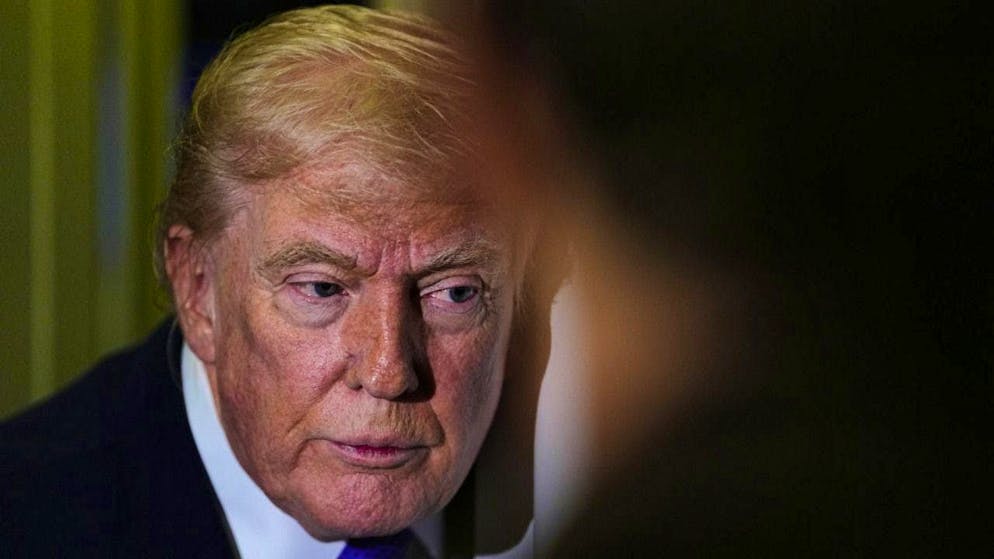
The USA and Iran are entering a second round of negotiations despite deep mutual mistrust. The "indirect talks" had initially begun with an exchange of messages through the mediator Oman, Iranian state radio reported. US President Donald Trump previously told journalists that he would be indirectly involved in these talks. We will see what can happen.

17.02.2026, 05:32
17.02.2026, 10:42
SDA
According to Iranian sources, the talks between the delegation from Tehran led by Foreign Minister Abbas Araghchi and the US side are taking place in the Omani embassy. The USA will be represented by special envoy Steve Witkoff and Trump's son-in-law, Jared Kushner.
Among other things, the negotiations will focus on Iran's controversial nuclear program. The USA wants to prevent the leadership in Tehran from acquiring nuclear weapons. Iran's government is prepared to limit its nuclear program, but is demanding the lifting of tough economic sanctions in return. Tehran ruled out other issues such as the missile program or support for militant groups in advance.
Protest movement takes a critical view of talks
The talks are taking place against the backdrop of a military threat from the United States. In January, Iran's state apparatus brutally crushed mass protests in its own country. Trump then threatened the Iranian leadership with military intervention and increased the military presence around Iran. The USA has since sent a second aircraft carrier to the region.
Since the mass protests at the beginning of January, Iran's leadership has been under more domestic pressure than it has been for decades. At the weekend, around one million people on several continents demonstrated for freedom in Iran. The day of action was called for by Reza Pahlavi, the son of the Shah of Persia, who was overthrown in 1979 and has been living in exile for decades. The protest movement is critical of a possible deal with the current leadership.
Iran: negotiations characterized by scepticism and mistrust
"We are negotiating under conditions of complete skepticism and mistrust. We have past experiences and under no circumstances are we allowed to lose sight of these experiences even for a moment," said Iran's foreign office spokesman Ismail Baghai with regard to the war last year, which Israel started shortly before the start of a round of negotiations between Iran and the USA.
"The attack on Iran's nuclear facilities is in no way justifiable on any logical, legal or moral basis," Baghai told the state news agency Irna. Time was now of the essence, he added. There was "no benefit in prolonging the negotiations", the spokesman said.
Trump, for his part, reiterated that Iran wanted to conclude an agreement. He did not think the country wanted to feel the consequences if a deal was not reached.
Iran's government sees opportunities for US cooperation
Before the second round of negotiations, Iran's Deputy Foreign Minister Hamid Ghanbari surprisingly named possible areas of cooperation with the USA. He was quoted by the Fars news agency as saying that a draft agreement would take into account "common interests in the areas of oil and gas". He also spoke of possible mining investments and the purchase of airplanes.
The minister explained that cooperation should focus on economic areas with the least possible domestic political sensitivity. Since the 1979 revolution, the USA has been considered the arch-enemy of the Islamic leadership in Tehran. Since then, the government has resisted Western influence, particularly in key industries.
Iran's Revolutionary Guards begin naval exercise
The navy of the Revolutionary Guards, Iran's elite military force, announced a maneuver in the Strait of Hormuz one day before the talks began. The aim of the military exercise is to test operational readiness and possible confrontation with military threats, the Guards said in a statement.
The Strait of Hormuz, which is around 55 kilometers wide, is a strait between Iran and Oman. It is considered one of the most important shipping routes for global oil exports. In the conflict with the USA, Iranian officers have threatened to block it at any time in the past.
Technical talks with UN nuclear watchdogs
On Monday, Foreign Minister Araghchi met with the head of the International Atomic Energy Agency, Rafael Grossi. Relations between the Iranian government and the IAEA had deteriorated significantly following Israel's war against the country last year. Iran restricted the nuclear watchdog's access. It was not until September 2025 that Tehran and the IAEA agreed to resume inspections with the mediation of Egypt.
Gulf states and Switzerland as neutral mediators
The new dialog between Tehran and Washington is being mediated by Oman. Its Foreign Minister Badr al-Bussaidi had already mediated in talks last year. Switzerland is also valued by the Iranian government as a neutral mediator.
Iran had already committed to limiting its nuclear program once in 2015. In return, sanctions were to be lifted. The Vienna nuclear deal, which was negotiated under his predecessor Barack Obama, has always been a thorn in Trump's side. In 2018, he unilaterally terminated the agreement. At the same time, he had new and tougher sanctions imposed on Iran. As a result, the Iranian leadership no longer complied with the conditions.