Living with severe burns Burn survivor Martin Achermann: "Life goals don't disappear"
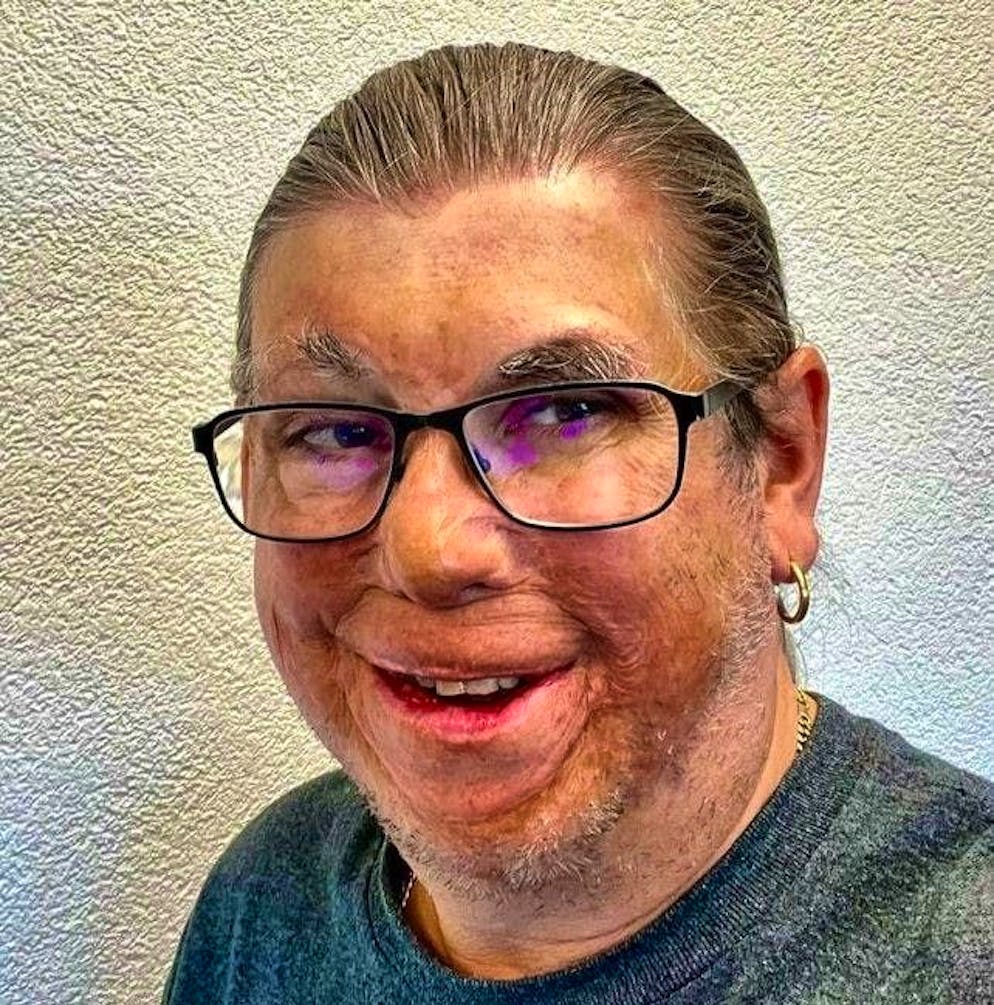
Martin Achermann suffered extensive burns in a motorcycle accident almost 30 years ago. In an interview with blue News, he talks about his journey after the accident.
No time? blue News summarizes for you
- Martin Achermann suffered severe burns in a motorcycle accident almost 30 years ago.
- Three months in intensive care, numerous operations and lengthy rehabilitation shaped his path.
- Dealing with his own reflection and the gaze of others was particularly difficult.
- Small steps forward and his own projects helped him to regain his self-confidence.
- Today he says: "Goals can remain, even if the path to them is different.
After the fire in Crans-Montana, it became clear what consequences severe burns can have for those affected - both medically and psychologically. For many, this marks the beginning of a life with an uncertain prognosis that changes from one moment to the next.
Martin Achermann knows what this means from his own experience. Almost 30 years ago, the 60-year-old from Nidwalden suffered severe burns in a motorcycle accident in Egypt. Around 30 percent of his skin was burned. This was followed by months in hospital, numerous operations and a long rehabilitation.
In an interview with blue News, Achermann talks about how he experienced this journey and what helped him not to lose sight of his goals.
Martin Achermann, whenyou look back on your accident today: What is the first thing that comes to mind?
At the moment, I think of the seriously injured people in Crans-Montana. That stirs up a lot of things again. A lot has come up in the last few days. Things that haven't been an issue for a long time. Names, individual scenes.
What do you remember?
For example, a physiotherapist in the burns intensive care unit. In the beginning, he only came to move my fingers and hand. I couldn't do anything actively myself, it was just about making sure the joints didn't get rusty.
We spent many hours together. At some point, he said to me: "When you leave here, throw me a ball. That was completely unrealistic for me. I said: I need facts, not fairy tales.
You didn't believe that was possible?
No. I was in hospital for a total of three and a half months. On the day I was discharged, the physiotherapist came into my room with a small foam ball in his hand. He said: We still have something to do. I was able to lift my arm maybe halfway - and I actually threw him the ball. That was incredible. Experiences like that carry you.
At the same time, the medical prognoses were very tough at the beginning. They said my hand would probably have to be amputated. I still have my hand today. I no longer have full mobility, I'm sure about half of the function is missing. But I can grip, hold and throw things, I have feeling. That's enormous.
How did you learn to live with the physical consequences of the burn injuries, including dealing with your own reflection?
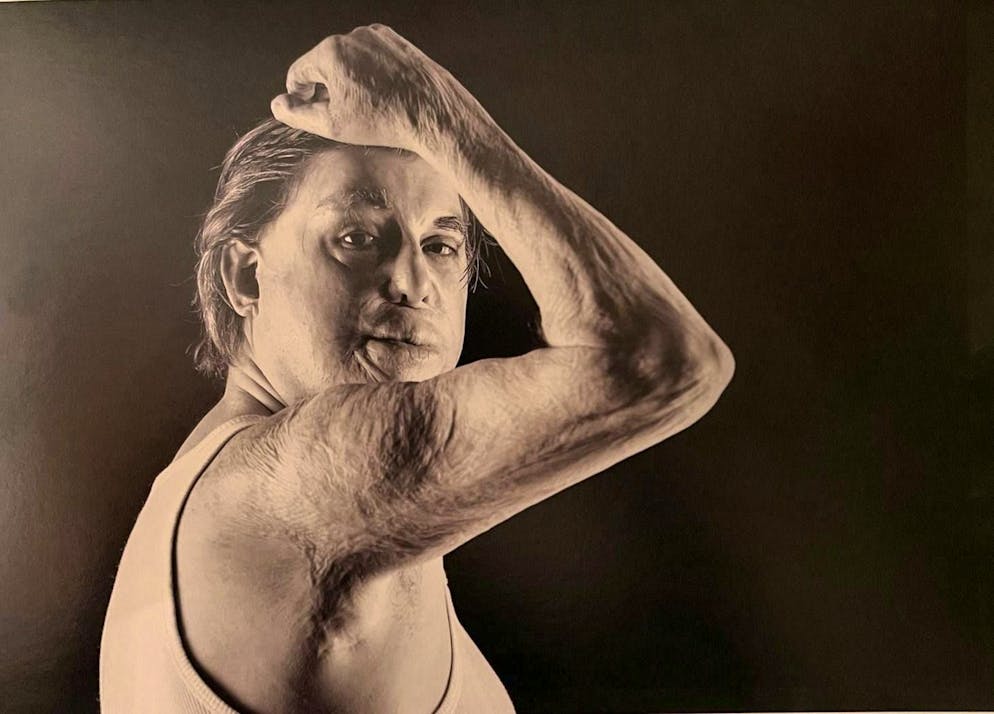
That was very difficult. My face was operated on and then completely bandaged for a week, including my eyelids being stitched shut. I wasn't allowed to move anything. There were deliberately no mirrors in the entire department.
But after this time, I said: I want to see myself. I have to deal with myself. Three nursing staff accompanied me to the mirror. I looked at myself and said: I know this one. It wasn't pretty, but it was me.
What happened after this first step?
Then I was unlucky. The skin started to break down again because of a germ that I had probably caught in Egypt and which didn't respond to the usual antibiotics. A week later I had to have another operation, then another.
During this time, the tissue on my face grew a lot and expanded. Eventually, after a third operation and adapted treatment, the skin remained stable. But there was this moment when the contours were suddenly gone, the face had a completely different shape. The head and face were round and bloated. That was intense. Very intense.
How did you deal with this change?
It was difficult to accept. The skin that was put on me was very thin, almost like tissue paper. It was grown in an incubator and grew from the size of a nickel to half a cake tin.
What did this complication mean for further treatment?
Because of the infection, I lost around three weeks before I could start compression. Plexiglas masks were something new at the time and were seen as a big step forward. But they were still not comfortable.
I wore my mask around the clock, except when eating and showering. Later, they suggested a silicone mask, which was skin-tight. It would have been more comfortable for the skin but exerted less pressure on the pits.
I suggested to the orthopaedic surgeon that he take an impression of my face, make the silicone only about two millimetres thick and put the existing Plexiglas mask over it. I didn't patent it, but he later developed the idea further. It was sensational for me. It was a great relief, both mentally and physically.
Was it important for your psyche that you dealt intensively with the healing process?
Yes, very much. That was the case with everything. Learning to walk again, moving your hand. Eyes open and through. I wanted to face up to it.
For example, I had to take a disinfectant bath several times a week. Dried skin and scabs were plucked off with tweezers by two nursing staff. I also wanted a pair of tweezers, so I actively helped. At that moment, I had the feeling again that I could do something myself, that I wasn't just at the mercy of others. I consciously went down this path. That helped me enormously.
What happened after the acute phase?
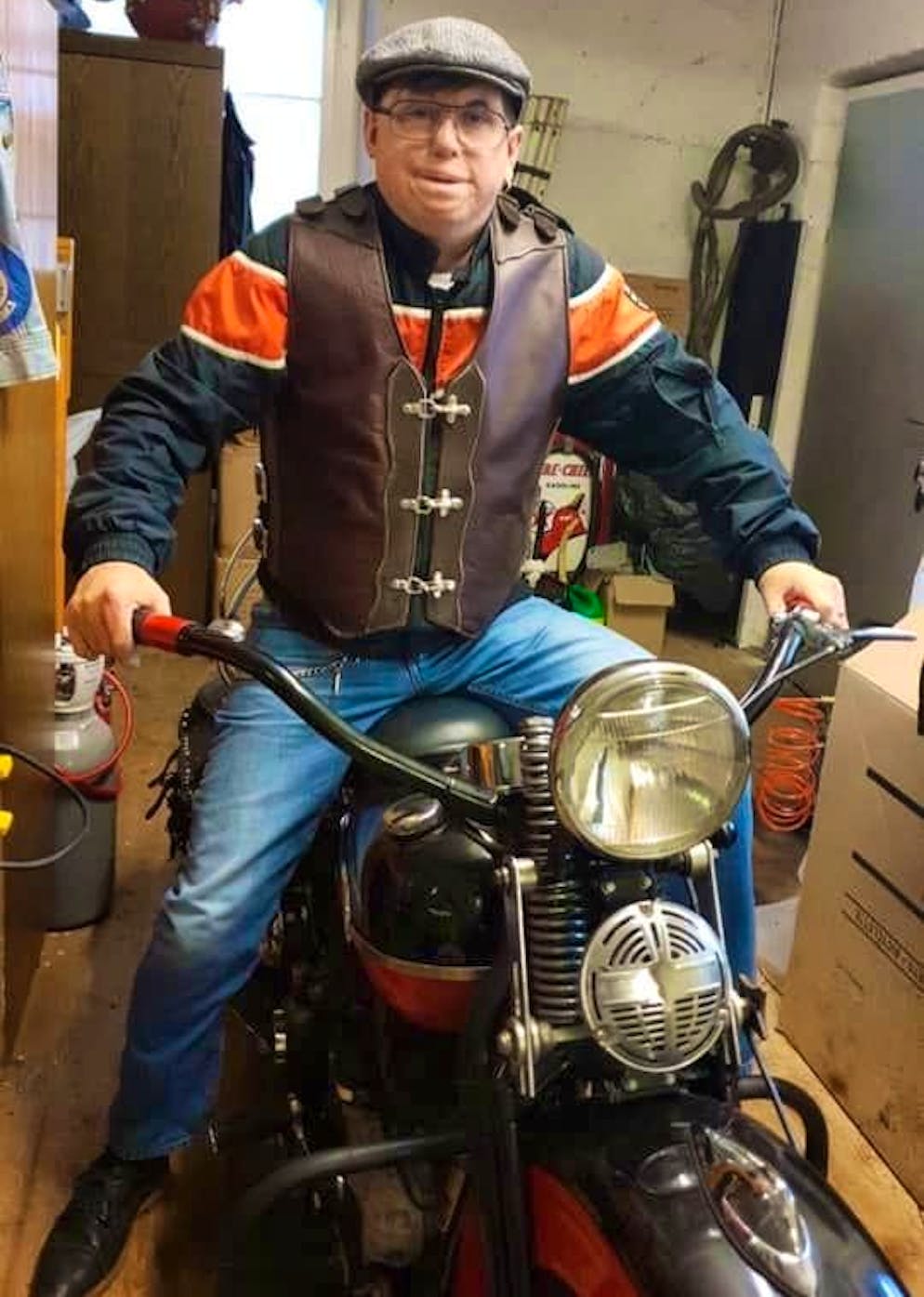
After two years, I did further training in the evenings and ran the household during the day. And I looked for a project. I started restoring a motorcycle. Basically, I bought a pile of scrap metal and put it back together piece by piece. For four years. Every thread, every hole I drilled myself was like therapy.
The motorcycle played a major role in your accident. Did this restoration have a special meaning for you?
It was about putting something back together step by step. That was important.
Because you were still a long way from that yourself at the time?
Exactly. After leaving hospital, I weighed 48 kilos, had hardly any strength in my whole body and my hands had limited mobility. Just thinking about riding a motorcycle again would have been life-threatening. I cried when I saw motorcycles.
But after a year of physiotherapy and strength training, I said: I'm going to start riding again. My accident didn't happen because of my own negligence, but because of someone else's mistake. A colleague accompanied me. We drove out for an hour, then back to Stans, where I lived. Many people grabbed their heads and thought it was crazy. The next day we drove up the Klausen. That's how I got a bit of independence back.
What did this independence mean to you?
A lot. For a long time after the accident, I was only out in the forest with my family and my partner Bea, where nobody saw me. I didn't dare go into the village, among people who knew me. It was only gradually that I began to visit friends or invite them over - always in small groups.
So the greatest thing was when I was able to drive alone again. In the car, I was simply a driver. Nobody saw the scars, the open spots, the blood. I drove for hours. I was free then.
How did you deal with the looks from outside?
I was afraid of them before I even got them. I deliberately avoided them. I didn't know what to expect.
The first time I went back to my favorite pub in Stans, it was quiet as a mouse when I walked in. Then the landlords sat me down and said: "Nice to see you back."
Were there any reactions that hurt or unsettled you?
When you see something out of the ordinary, a quick glance is normal. But if your mouth stays open, it turns into gawking. There have been situations where people have stopped on the street just to look at my face again. I was embarrassed and insecure at first. I had the feeling that I was in the wrong place.
Once in Stans, a woman ran in front of a car because she was looking at me for so long. My first thought was: now it's my fault that something has happened to her. In hindsight, I realized it was just unfortunate. A few weeks later, a cyclist drove into the lake because she looked at me for too long. I had to laugh and we helped her out. That's when I realized: I already don't care what others think. That is also a process.
How has your relationship with your body and your self-esteem changed over the years?
In the beginning, my body was something that no longer worked. But I had it explained to me exactly what no longer worked in my hand, what was stuck in my fingers. This knowledge helped me to regain confidence.
It was similar with self-esteem. Appearance played a big role for a long time. Later, I even got annoyed again about little things like pimples. This made me realize that my perspective had shifted. Everything is no longer focused on the injuries.
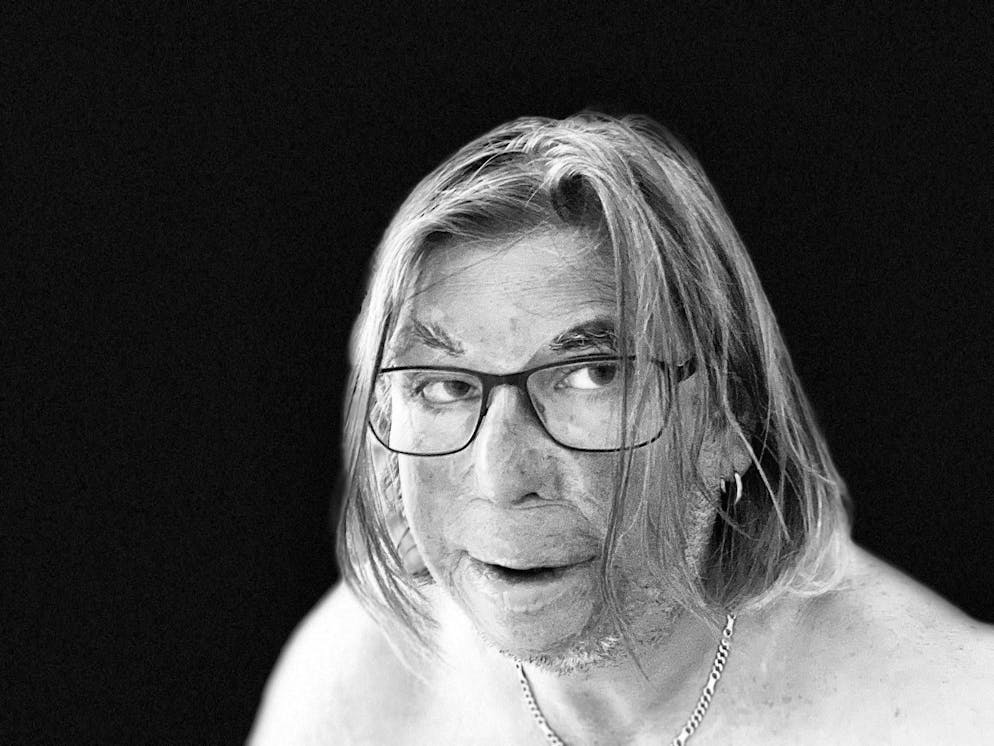
Of course there are things that remain. When I talk a lot, saliva collects at the corners of my mouth, creating a film that dries and that I have to wipe off every ten minutes or so. It's part of my everyday life. But it doesn't define me.
Are there still moments today when you miss your former self - and not just in terms of your appearance?
No, that no longer plays a major role today. There is no other me standing next to you. You are who you are.
Of course, at the beginning I asked myself: what if this accident hadn't happened? But these mind games don't help. You don't find any answers. Maybe my life would have been completely different. Maybe I would never have returned from Cairo to Stans. And perhaps my relationship with my partner would not have lasted - with the woman I had only been dating for three and a half months at the time of the accident and with whom I now have a son.
And at some point, you have to deal with what remains after the accident. I learned that at the very beginning in hospital. From there, you ask yourself: What dreams do I still have? What can I still do with my body and my abilities?
Some things no longer work physically as they used to. But sometimes there are alternatives that feel different but are still good.
So don't give up, but take detours?
Exactly. Maybe something won't work today, but in two years' time. There may also come a point when you have to say: This really isn't possible anymore. Then you have to accept that. But then you can also say: I've tried everything. And maybe things will look different again in five years' time.
That sounds very resilient. Were there nevertheless phases in which you lost your place in life?
Yes, there were. And relatively early on. At the time, I seriously asked myself what I could still do professionally. Whether I would ever have a job again that would fulfill me.
At the time of the accident, I had my absolute dream job as an electrician. In Egypt, I was installing print processing machines for a Swiss company together with a local team. The work was intensive, demanding and adventurous. And suddenly it was completely open whether such a professional life would ever be possible again.
When you look at Martin from back then today: Is there anything you would say to him?
That's not an easy question. Before the accident, I was a very self-confident, perhaps even cheeky Cheib. Offensive, direct. A few years after the accident, my father once said to me: "Maybe your often criticized cheekiness has helped you to go this way."
This constant forging ahead, this feeling of "What does the world cost, I'll pay cash", didn't always go down well.
If I understand you correctly, did the accident and everything that followed make you a more complex person?
Definitely. Multi-layered is a good word. It's not just the accident. I was already a very curious person beforehand. But the accident and the subsequent course of events have greatly broadened my perspective.
Did this perspective also help you during the healing phase?
Yes. The moment came relatively quickly when I saw that I could still do something: Something is still possible. At the beginning, I really thought there was no chance. But then I focused on healing. The hand was still there. One finger was twitching. Then another one. And then came this inner play instinct, perhaps also the athlete in me, the ambition. I wanted to try things out, see what was still possible. Not doggedly, but curiously. That helped me.
What advice do you give to people who have to reorganize their lives after a serious fire accident?
I always say the same thing: The goals you had don't have to just disappear. Maybe you need a different path. Maybe you need help. But you shouldn't give up.
If someone says, I want to climb that mountain again, that doesn't necessarily mean you have to climb it on foot. Maybe you fly up in a helicopter and enjoy it. If it helps a person to move on internally, then it's justified.
What was that for you?
For me, it was music. I used to play the trumpet at the carnival. After the accident, I couldn't do that anymore. Once I tried anyway, wearing a face mask, in a state of euphoria, when a colleague put his trumpet in my hand. No sound came out. The air only came out at the corners of my mouth. I started to cry, it hurt so much. It was clear to me that it was gone forever.
A few years later, I tried again. It still didn't work. Then, another ten years later, I bought a tuba with a large mouthpiece. I thought: it only has three or four valves, it must work. And it actually worked better.
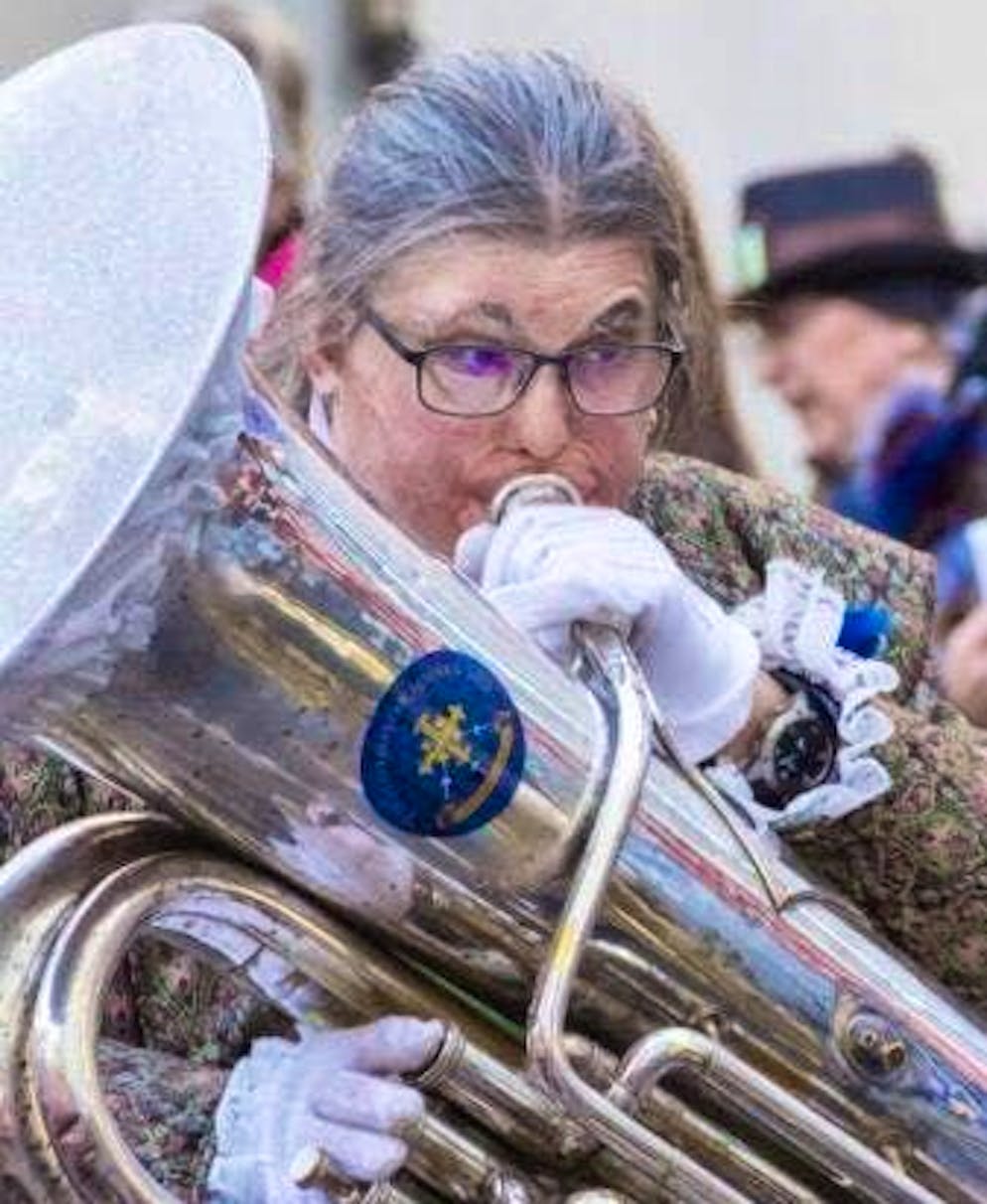
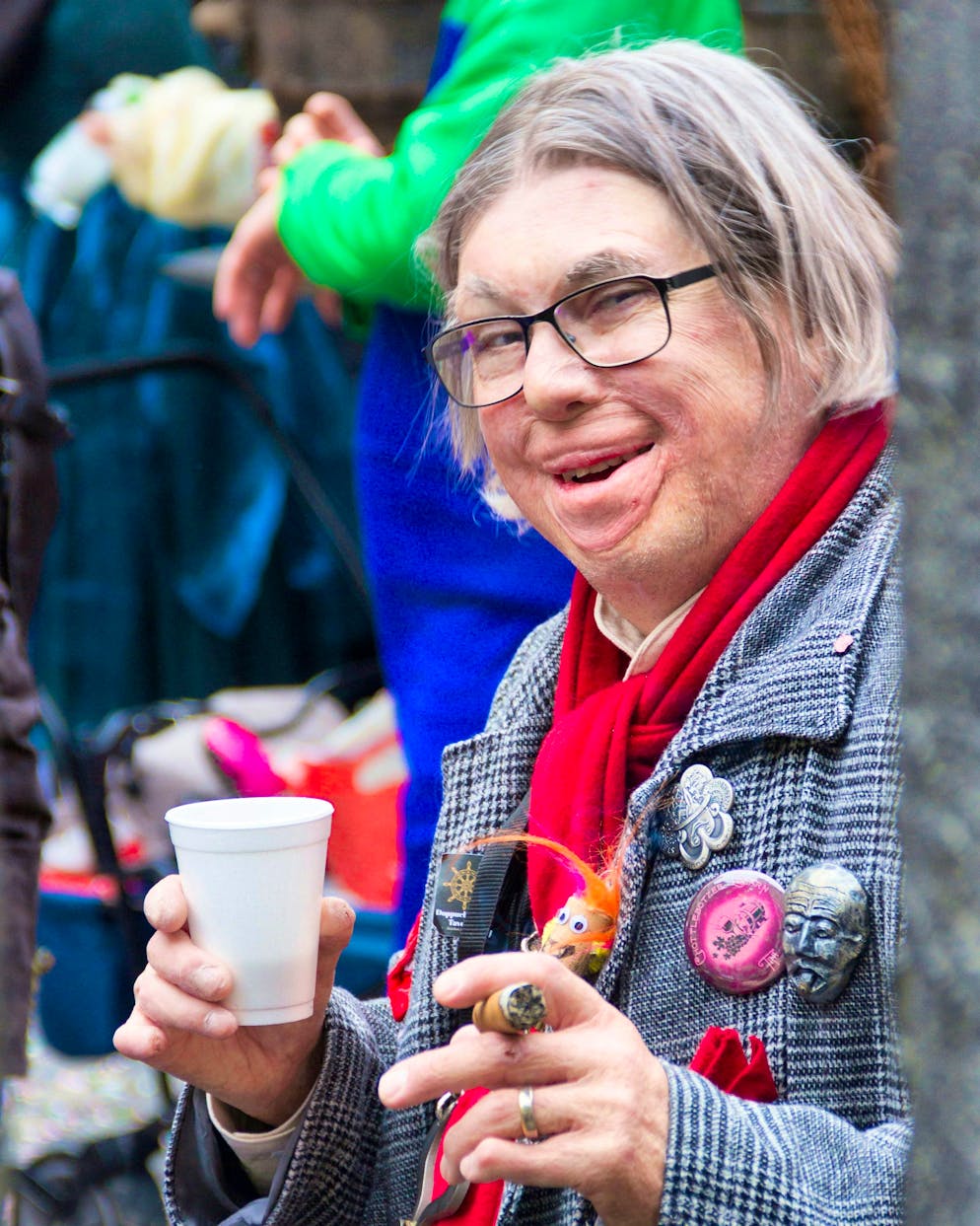
Today I play bass in a Guggenmusik band. It's great fun and gives me an incredible amount of energy. And funnily enough, playing the tuba has strengthened my facial muscles so much that I can now even play the trumpet again.
That's a powerful image of how things can change.
Exactly. It's about looking: Is there something else that I also enjoy? It doesn't have to be exactly the same. But the satisfaction can be similar. Trying things out is important. Having a goal, but remaining open-minded.
But it's important for me to say: this is not a blueprint. It is not a recipe. Every person is different. But it helps to hear different possibilities, to get to know different paths and then to decide for yourself what might work.
Not everyone likes the same path.
And that's exactly why you shouldn't compare people. I often received compliments on how I dealt with my situation. At the same time, I've heard things about others like: "It's not so bad for him, he shouldn't make such a fuss."
That's simply not true. What I say is non-judgmental. Some people carry very heavy rucksacks, even if you can't tell by looking at them.
So less judgmental?
Yes, don't judge too early. Everyone is different. Some people think: "He's crazy." But if something helps a person to find a bit of peace and doesn't harm anyone, then it's legitimate. Even if it seems strange from the outside. Respect and empathy are crucial.
And sometimes it's also important to wait and see. There were people who didn't get in touch with me for a long time. One dear friend even didn't contact me for two years. At some point, we ran into each other in the village. We both cried and hugged each other.
That's when I realized that he was also in shock and couldn't deal with my grief. It helps a lot if you try to put yourself in other people's shoes.
Verein Brandgezeichnet

Brandgezeichnet is an association for people with burns that promotes exchange between those affected and supports reintegration into everyday life after a burn injury.