Economy Construction industry expects stable growth in 2026 - more apartments required
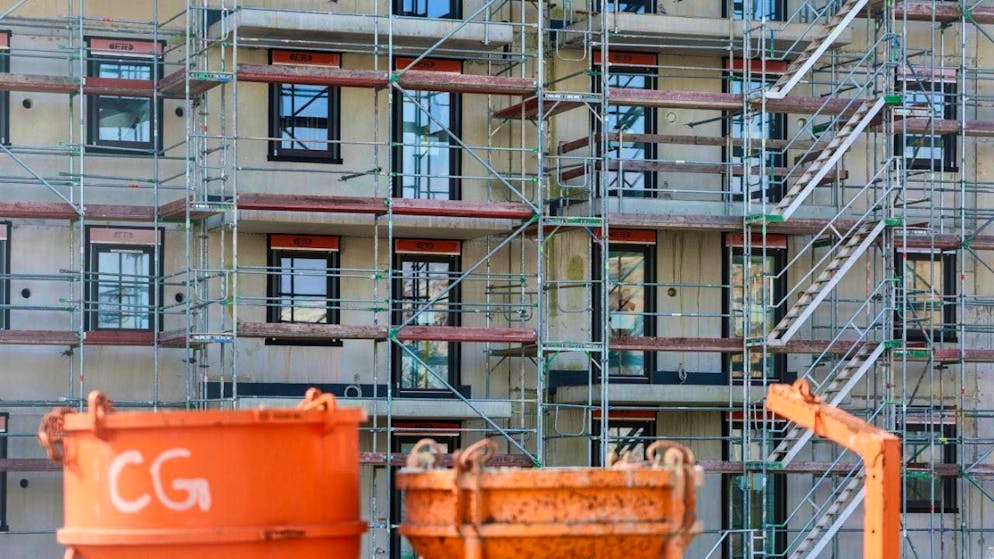
The Swiss construction industry grew significantly last year and is expected to grow again in 2026. According to the Swiss Association of Master Builders (SBV), residential construction remains the main driver, although it is lagging behind demand due to structural hurdles.

25.02.2026, 10:07
SDA
Construction activity in building construction and civil engineering rose by 2.1% to just under CHF 23.9 billion in 2025, as the SBC reported on Wednesday based on the construction index. The fourth quarter saw particularly strong growth of 6.3% compared to the previous year.
Residential construction remained the mainstay and grew by 4.8% in 2025. Incoming orders in this segment even grew by 11 percent. Overall, orders in the main construction sector increased by 3.7% and the order backlog at the end of the year was 4.5% higher than the previous year.
For 2026, the industry expects turnover of around CHF 24.4 billion, which corresponds to an increase of 1.9%. Residential construction is likely to remain the most important growth driver, according to the report.
SBC wants more speed in residential construction
However, things are not moving fast enough for the SBC: according to the association, around 50,000 new apartments would be needed each year to alleviate the housing shortage; this mark was last reached in 2018. The measures launched by the federal government to combat the housing shortage have only been implemented to a small extent so far.
The association therefore once again called for a general reduction in the number of people entitled to submit objections, faster building permits, deregulation of the more than 140,000 building regulations across the country and more active spatial planning by the cantons and municipalities.
According to the SBC, in addition to residential construction, civil engineering ensures stable basic capacity utilization thanks to infrastructure investments. However, budget bottlenecks, high capacity utilization and a shortage of skilled workers are slowing the pace here. The SBC advocates that the federal government should not reduce its contributions to the financing of railroads and roads, even though this would mean the permanent retention of the VAT per mille.