Media expert classifies Municipal president's appearance leads to "a communicative super-GAU"
The municipality of Crans-Montana wanted to show transparency after the fire in the "Le Constellation" bar. However, contradictory statements and a lack of apologies led to criticism. A PR expert assesses the media appearance.
No time? blue News summarizes for you
- The municipality of Crans-Montana wanted to show transparency with an early press conference, but became entangled in contradictions.
- Statements about its own role as a victim, lack of controls and responsibility caused irritation.
- A PR expert explains why less justification and more attitude would have been necessary.
Following the devastating fire in the "Le Constellation" bar, in which 40 people lost their lives, the municipality of Crans-Montana has spoken out publicly for the first time. Mayor Nicolas Féraud answered questions from the media at a press conference. The appearance was intended to provide clarification and transparency - but caused new irritation.
Several statements seemed contradictory: on the one hand, the municipality emphasized that it wanted to take responsibility. On the other hand, Féraud declared that Crans-Montana was "the most aggrieved" and was acting as joint plaintiff in the criminal proceedings. At the same time, it was admitted that the bar had not been inspected since 2019.
Was it right to go public so early? Media expert Jenny Wagner from Ferris Bühler Communications sees this as a key dilemma in crisis communication. "Public silence can come across as an admission of guilt - but unprepared communication is at least as dangerous," says Wagner. Particularly in the case of ongoing investigations, it can make sense to communicate very cautiously at first.
"A communicative super-GAU"
In the case of Crans-Montana, however, the situation is particularly delicate: "It's not a closed-off economic scandal, but a public tragedy with fatalities. Staying silent for too long would have quickly come across as ignorance," she explains. This made clear preparation all the more important. The fact that the mayor has now had to publicly correct earlier statements - for example on allegedly non-existent failings - has cost trust.
Wagner is particularly critical of the statement that the municipality itself is "the most damaged"."That's a communications disaster," she says. Anyone who puts their own suffering before that of the victims in a situation like this comes across as insensitive and self-centered. "This achieves exactly the opposite of what crisis communication is supposed to do."
Instead, the municipality could have said clearly: Regardless of the outcome of the investigation, it would take responsibility for failings and apologize for the suffering of those affected. "From a communication perspective, that would not be an admission of guilt, but a sign of attitude."
«He wanted to gain control and lost trust and closeness to the public in the process.»
Media expert
In the expert's view, another problem was the strong focus on justification. "In a crisis, it's not who defends themselves best that counts, but who credibly takes responsibility," says Wagner. The emphasis on "focusing only on facts" seems out of place in a tragedy with many fatalities. "It takes empathy, humanity - and the courage to admit mistakes."
"No acceptance of responsibility"
In her view, one possible formulation could have been as follows: The company deeply regrets that legally required fire safety checks were not carried out for years, apologizes for this and will fully investigate the causes. "This is not self-incrimination, but strong leadership."
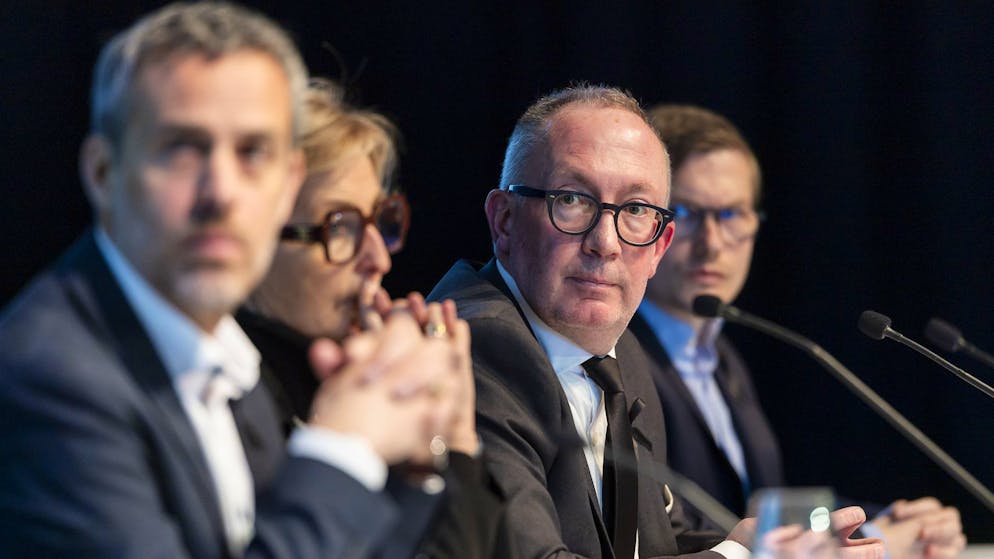
The municipal president's response to the question of an apology also drew criticism. Féraud simply said: "We are sad." "That's an emotional statement, but not an acceptance of responsibility," says Wagner. It leaves open what this sadness refers to - the victims, the company's own failings or the criticism.
No one expects an apology for the fire itself as long as the causes have not been clarified. "But the municipality is responsible for the years of failure to carry out statutory inspections - regardless of whether this was the cause of the fire."
A fine line in crisis communication
In the view of communications expert Wagner, the mayor became a victim of his own communication with these mistakes: "He wanted to gain control of the narrative early on, but had to revise earlier statements and lost trust and proximity to the public in the process."
The case shows how fine the line is in crisis communication. Silence too soon can come across as ducking away, speaking too soon as unprepared and cold. "Crisis communication is not image cultivation," says Wagner. "It is a service to the public." And it doesn't start with perfect answers - but with the courage to show responsibility, even if not everything has been clarified yet.