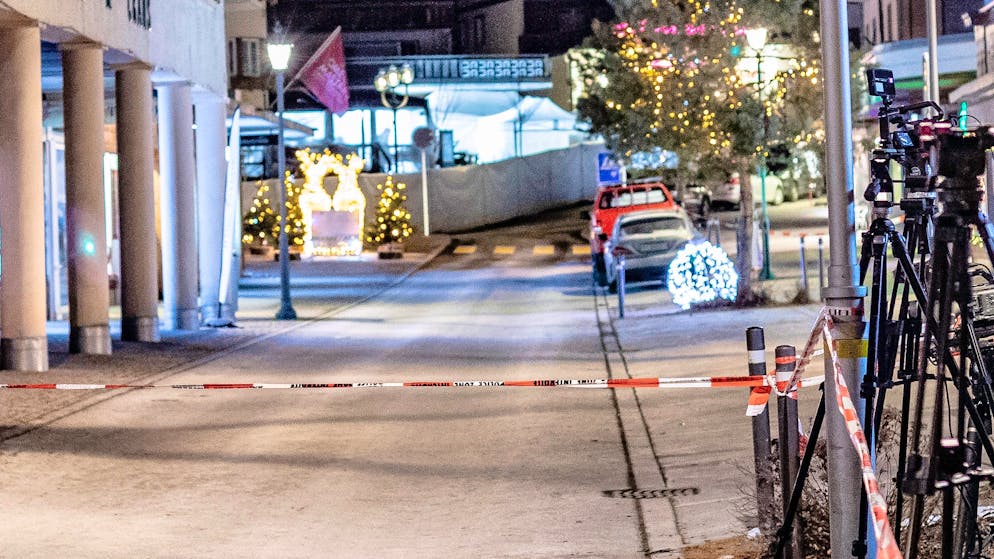
Bell ringing and a minute's silence Program on the national day of mourning for Crans-Montana - an overview of the most important events
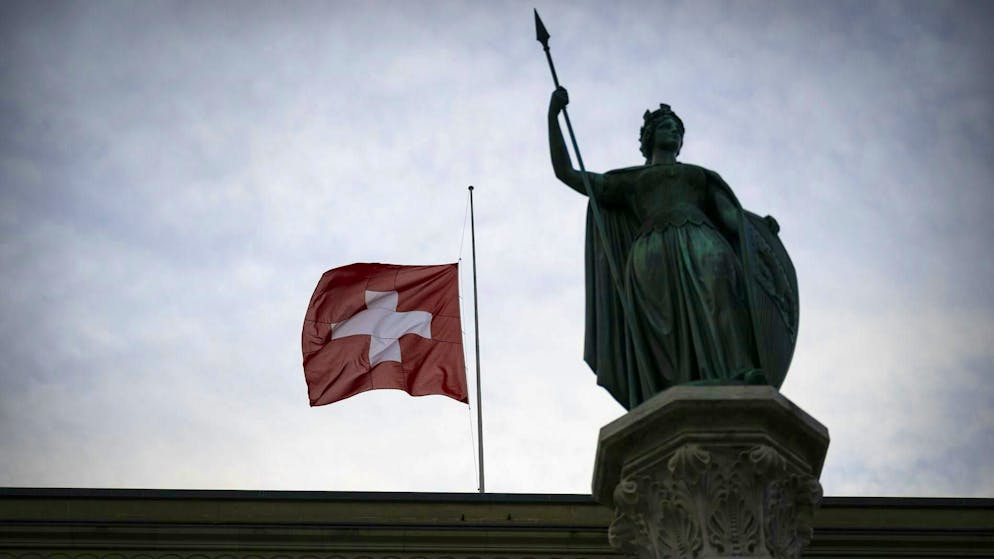
Following the devastating fire disaster in Crans-Montana VS, Switzerland is celebrating a national day of mourning on Friday, January 9, 2026 - a rare event in the country's history. What you need to know about it.
No time? blue News summarizes for you
- Following the tragedy in Crans-Montana, President Guy Parmelin declared January 9 as a national day of mourning with bells ringing and a minute's silence.
- Presidents from France and Italy will take part in the ceremony, which will be moved from Crans-Montana to Martigny due to weather conditions and broadcast live.
- National days of mourning are rare in Switzerland and serve mainly as a symbolic act of remembrance.
Following the New Year's Eve disaster in Crans-Montana, President Guy Parmelin declared a period of mourning on January 1st. The flags of all Swiss representations worldwide were flown at half-mast. The Federal Council has called a national day of mourning for Friday, January 9. blue News explains exactly what this means.
What is happening in Valais on Friday?
On Friday, a memorial ceremony will take place at the Cerm exhibition and assembly center in Martigny, 50 minutes by car from Crans-Montana, from 1.45 p.m. It has been organized by the Confederation together with the Valais State Chancellery and the regional churches. The program of the ceremony includes readings, symbolic gestures, musical performances and speeches by representatives of the authorities.
Over 1000 invited guests are expected to attend. In attendance will be President Guy Parmelin, Federal Councillors Ignazio Cassis and Beat Jans and Federal Chancellor Viktor Rossi. Also invited are the relatives of the victims, religious representatives and countries that have either been directly affected by the tragedy or have offered their help.
President Sergio Mattarella will be attending from Italy and President Emmanuel Macron from France. The President of the European Parliament, Roberta Metsola, will also attend.
The event was originally scheduled to take place in a church in Crans-Montana. However, for security reasons and due to the expected weather conditions, the memorial service was moved to Martigny.
The ceremony will be broadcast live to Crans-Montana at the Le Régent congress center, where the people of Crans-Montana will be able to attend. There will also be a big screen outside in Crans-Montana.
What is happening outside Valais?
The national day of mourning will be celebrated throughout Switzerland.
Church bells will also ring throughout the country at 2 pm. First the hourly chime will sound, followed by a five-minute peal of bells as a sign of collective pause and nationwide solidarity. The Federal Council and the Christian churches invite the population to dedicate this moment to the memory of the deceased, solidarity with the injured and their families and thanks to all the emergency services.
In Zurich, the city council invites people to observe a minute's silence in the Münsterhof at 2 p.m., followed by a commemorative event in the Fraumünster. In Basel, members of the government and the Grand Council as well as the population will gather on the market square in front of the town hall. In the evening, there will be an ecumenical reflection in the Elisabethen Open Church.

Public transport will also visibly participate in the commemoration. Swiss Federal Railways (SBB) will fly flags at stations at half-mast, provide information throughout the day on screens, announcements and the app about the day of mourning and draw attention to the minute's silence. At 2 p.m., the background music at stations is switched off, and train whistles can be sounded shortly beforehand as a sign of remembrance.
The central memorial service in Martigny will also be broadcast live on television and radio, including on SRF, RTS and RSI. This will allow people throughout the country - and beyond - to take part in the ceremony.
Numerous churches throughout Switzerland will also remain open throughout the day, inviting people to silence, prayer and personal remembrance. Where possible, chaplains will be available for discussions. The Confederation has set up an official online book of condolence for people who wish to express their condolences in writing.
When are such days of mourning declared?
It is rather unusual for a day of mourning to take place in Switzerland. In fact, our country is hardly known for national mourning. This is due to the federal structure, historian Sacha Zala explains to the Tages-Anzeiger newspaper. "But developments in other countries have not left Switzerland unscathed."
State mourning is more of a tradition in countries such as the UK, where the death of Queen Elizabeth II was recently officially mourned for several days.
"Unlike in other countries, the national day of mourning is not a legal institution in Switzerland," says the Federal Chancellery. However, the Federal Council can invite people to an act of mourning or remembrance. "It is not possible for the Confederation to oblige cantons or private individuals to observe this day or make contributions to it - for example, to grant employees a day off - without a corresponding basis in federal law."
Have there already been such days of mourning in Switzerland?
There was already a similar moment of mourning and remembrance during the coronavirus pandemic in 2021. On 5 March, church bells across the country rang for up to a quarter of an hour to commemorate the victims. Funeral services and a minute's silence were also scheduled for October 1 following the attack in Zug on September 27, 2001. And after the tsunami in South East Asia after Christmas 2004, there was a national day of mourning on January 5, 2005.